Anatomical Heart SVG: When Teddy Bear Holding a Broken Heart Meets Medical Precision
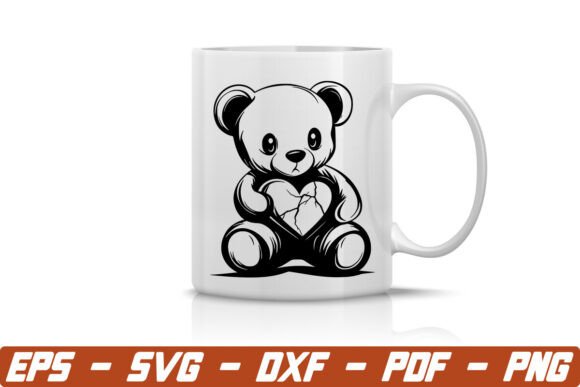
Digital design assets have transformed how crafters, designers, and small business owners approach creative projects. Among the more emotionally resonant offerings in this space is the Teddy Bear Holding a Broken Heart SVG—a design that pairs sentimental imagery with the stark realism of anatomical heart art. This package, which also includes the Presenting the Anatomical Heart SVG, merges artistic expression with medically informed illustration, giving users a versatile set of heart-themed graphics that serve multiple purposes.
Understanding what this collection offers, how it compares to other heart SVG options, and where its strengths and limitations lie can help you decide whether it fits your specific project needs. This article walks through the key considerations, tradeoffs, and practical use cases so you can make an informed choice without the marketing gloss.
What the Teddy Bear Holding a Broken Heart SVG Package Includes
This digital download delivers five file formats for each design: SVG, EPS, PNG (print-ready), DXF, and PDF. Each file is rendered at 15 x 18 inches with a 300 dpi resolution, which means you get crisp, scalable graphics suitable for both screen-based design work and physical printing. The package covers two main motifs—a teddy bear holding a broken heart and a standalone anatomical heart—but the real draw is the combination of emotional symbolism and anatomical detail.
The anatomical heart component is not a stylized or cartoonish version. It reflects actual human heart anatomy, with chambers, vessels, and structural contours drawn to be recognizable to those with medical or scientific interests. This level of accuracy sets it apart from generic heart clip art that often prioritizes symmetry over realism.
For designers, the file variety ensures compatibility with virtually any software or cutting machine. Whether you use Adobe Illustrator, Cricut Design Space, Silhouette Studio, or a laser cutter, one of the provided formats will work. The PNG file is especially useful for those who need an immediate print-ready image without further editing.
How This Package Compares with Other Heart SVG Options
Heart-themed SVGs are abundant online, but most fall into predictable categories. Some emphasize minimalism—simple outlines or flat vector hearts used for Valentine's Day cards or wedding invitations. Others lean into whimsy, featuring cartoon hearts with faces, wings, or decorative flourishes. And then there are medical heart SVGs, which prioritize anatomical accuracy and are often used in healthcare branding, educational materials, or medical illustration projects.
This Teddy Bear Holding a Broken Heart SVG package sits at the intersection of the emotional and the clinical. The teddy bear motif appeals to those working on grief-related projects, children's bereavement materials, or sentimental keepsakes. The anatomical heart, by contrast, offers a realistic alternative that could be used in medical-themed crafts, health awareness campaigns, or even tattoo design drafts.
Where other packages might offer multiple variations of the same style, this collection gives you just two designs but in five formats each. That tradeoff—depth of format variety versus breadth of design variety—is worth considering. If you need a wide range of heart shapes, this may feel limited. But if you value file flexibility and precision, the package delivers more than most single-design downloads.
Another comparison point is resolution and size. Many free or low-cost SVGs come in smaller dimensions at 72 or 150 dpi, which can look pixelated when printed at larger sizes. At 300 dpi and 15 x 18 inches, this package is optimized for high-quality print work, signage, or detailed cutting projects. That makes it a stronger candidate for professional or semi-professional use than many budget alternatives.
Strengths and Practical Advantages
The most striking strength of this collection is the anatomical detail. For designers or educators who need a heart illustration that looks like a real organ, the Presenting the Anatomical Heart SVG provides a reference-quality image without requiring a medical license or expensive stock image subscription. The chambers, major vessels, and overall structure are rendered with enough accuracy to be useful in health class materials, doctor's office decor, or anatomy study aids.
The teddy bear component, meanwhile, offers emotional contrast. A bear clutching a broken heart can symbolize loss, healing, or empathy—themes that resonate in sympathy cards, memorial crafts, or therapeutic art projects. Having both motifs in one package means you can create contrasting pieces or complementary designs without sourcing from multiple vendors.
File format coverage is another clear benefit. Because the package includes SVG, EPS, PNG, DXF, and PDF, you avoid the frustration of downloading a file only to find it incompatible with your software. The DXF format, in particular, is useful for those using laser cutters or CAD software, while the EPS file suits professional print designers who work with vector editing tools.
Commercial use permission adds practical value. If you run a small shop on Etsy, Amazon Handmade, or a similar platform, you can legally use these designs to create physical products—t-shirts, mugs, wall art, stickers—and sell them. The restriction on reselling the digital files themselves is standard and usually not a limitation for most creators.
Limitations and When This May Not Be the Best Fit
No design package is universal, and this one has tradeoffs worth acknowledging. The most notable is the limited number of designs. You get two motifs—the teddy bear with a broken heart and the anatomical heart—which means if you need a broader library of heart styles, you will likely need to supplement with additional purchases. Designers working on a project that requires multiple heart variations (e.g., a series of Valentine's cards, a heart-themed logo suite, or a set of icons) may find this package too narrow.
Another consideration is the aesthetic blend. The combination of a cute, sentimental teddy bear with a medically precise heart may be exactly what some projects need, but it can also be a mismatch for certain audiences. If your brand or project leans heavily toward one style—say, purely clinical and educational—the teddy bear design may sit unused. Conversely, if you need only whimsical, child-friendly imagery, the anatomical heart may feel too graphic or severe.
There is also the question of customization. While the SVG and EPS files are vector-based and editable, the level of detail in the anatomical heart means that significant reshaping or simplification could be time-consuming. If you need a heavily modified version—such as removing specific vessels or altering proportions—starting from a simpler base vector might be more efficient.
Finally, while 300 dpi is excellent for print, some large-format applications (banners, posters above 24 x 36 inches) may require even higher resolution or scaling that could introduce softness. For typical home crafting, small business products, or standard print sizes, the resolution is more than adequate.
Best-Fit Situations and Realistic Use Cases
This package is well-suited for several specific scenarios. If you create sympathy or condolence materials, the teddy bear with a broken heart offers a visual shorthand for grief that many find comforting without being overly religious or generic. A card featuring this design, paired with a handwritten note, can feel more personal than store-bought alternatives.
For medical educators or healthcare communicators, the anatomical heart SVG can be incorporated into handouts, presentations, or infographics about heart health, cardiovascular disease, or anatomical study. Because it is medically informed, it carries more credibility than a clip-art heart when used in professional contexts.
Small business owners who produce heart-themed merchandise—such as enamel pins, stickers, tote bags, or apparel—can use both designs to offer variety within a niche. The teddy bear motif may appeal to a more sentimental customer base, while the anatomical heart could resonate with science enthusiasts, medical professionals, or those interested in alternative aesthetics.
Tattoo artists or designers creating flash sheets may also find value here. The anatomical heart, with its detailed structure, can serve as a reference or base for custom tattoo designs. The teddy bear, meanwhile, works well for memorial or symbolic tattoos. Having both in vector format allows for easy resizing and adjustment before committing to skin.
Factors to Consider Before Purchasing
Before deciding, think about the scope of your project and the audience you are designing for. If emotional storytelling and medical accuracy are both relevant, this package delivers a rare combination. If your needs are more narrowly focused—say, you only need a simple heart icon for a logo—there are simpler, often free, alternatives that might save you time and money.
Also consider your technical comfort with vector files. While the formats are widely compatible, editing SVG or EPS files requires vector editing software such as Adobe Illustrator, Inkscape, or Affinity Designer. If you rely solely on raster-based programs like Photoshop or mobile design apps, the PNG file will serve you well, but you will not be able to fully leverage the vector scalability.
For those using cutting machines, the DXF and SVG formats are generally reliable, but it is always wise to test a small cut before committing to a large batch. The 15 x 18 inch size is generous, so if your machine has a smaller cutting mat, you may need to scale down, which is straightforward with vector files.
Commercial use rights are included, which broadens the package's value for entrepreneurs. However, if you plan to use the designs as part of a larger digital product—such as a printable planner or digital scrapbooking kit—double-check that your intended use falls within the license terms. Reselling the digital files themselves is prohibited, which is standard practice across most SVG marketplaces.
Making the Right Choice for Your Project
The Teddy Bear Holding a Broken Heart SVG and Presenting the Anatomical Heart SVG package occupies a distinct niche in the crowded world of heart-themed digital assets. It offers something most alternatives do not: a pairing of emotional sentiment and anatomical precision, backed by high-resolution, multi-format files that work across design workflows.
If your project calls for a heart that tells a story—whether of loss, healing, education, or human biology—this collection provides a solid foundation. For designers who need breadth over depth, it may serve as one component of a larger library rather than a standalone solution. Either way, the combination of file flexibility, resolution quality, and commercial permission makes it a practical addition to any digital toolbox.
By weighing the strengths against the limitations and matching them to your specific use case, you can decide whether this package aligns with your creative or commercial goals. The best choice is the one that fits your project's tone, technical requirements, and audience expectations—and for certain applications, this blend of teddy bear tenderness and anatomical realism is exactly that.