Autumn Pattern Digital Papers in Contemporary Creative Workflows
Digital design continues to evolve as creators seek efficient ways to bring seasonal aesthetics into their projects. Autumn Pattern Digital Papers represent a growing category of resources that bridge traditional crafting sensibilities with modern digital workflows. These high-resolution assets allow designers, hobbyists, and business owners to incorporate the warm, earthy tones of fall without starting from scratch. Understanding how these resources function, where they excel, and what to consider when integrating them can significantly improve both creative output and operational efficiency.
The Technical Foundation of Digital Papers
Resolution plays a critical role in how digital papers perform across different applications. Autumn Pattern Digital Papers at 2000 x 2000 pixels offer a balance between file manageability and output quality. At this size, each paper provides enough detail for standard printing tasks, scrapbooking layouts, and digital compositions without overwhelming storage or processing resources. The square format also simplifies tiling and alignment when covering larger areas or creating seamless backgrounds.
File format considerations matter as well. Most digital papers in this category are delivered as high-quality PNG or JPEG files. PNG preserves transparency where needed, while JPEG offers efficient compression for patterns that do not require alpha channels. When working with layered designs in software like Adobe Photoshop, Procreate, or Affinity Designer, the 2000 x 2000 resolution ensures that scaling down maintains sharpness while scaling up remains acceptable for most personal and commercial printing applications up to approximately 8 x 8 inches at 300 DPI.
Color space is another subtle but important technical detail. Digital papers optimized for screen use typically employ sRGB, which aligns with web and mobile viewing. However, creators preparing files for professional print should confirm whether their chosen papers support wider gamuts like Adobe RGB or are at least convertible without significant color shift. The warm oranges, deep burgundies, and golden yellows characteristic of autumn themes can lose vibrancy if color management is overlooked.
Pattern Variety and Design Diversity
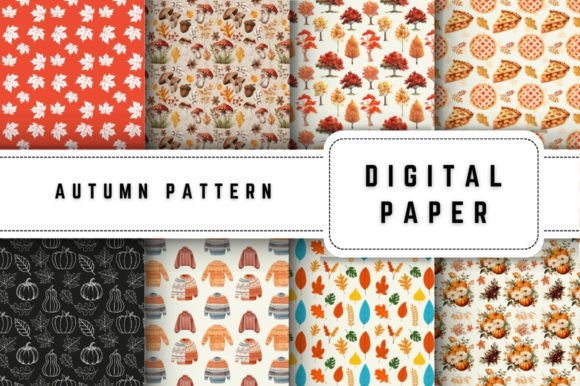
The twelve unique patterns typically found in an Autumn Pattern Digital Papers collection cover a range of stylistic directions. Some patterns focus on natural motifs such as scattered oak leaves, maple silhouettes, or acorn clusters. Others emphasize texture and atmosphere with plaid weaves, knitted stitches, or watercolor washes in seasonal hues. This diversity allows creators to mix and match within a single project without visual fatigue.
Observing how professional surface designers assemble collections reveals intentional contrast. A set might pair a dense, repeating leaf motif with a subtle linen texture, then balance those with a bold geometric plaid and a soft, hand-painted gradient. This variety ensures that users can find appropriate papers for both focal elements and supporting backgrounds. For instance, a scrapbook page highlighting family photos from a fall hike could use a muted bark texture as the base layer while reserving the vivid leaf pattern for accent strips or photo mats.
Color palettes in these collections typically revolve around familiar autumn associations: pumpkin orange, russet brown, mustard yellow, olive green, and deep crimson. Yet contemporary digital papers sometimes incorporate unexpected accents such as dusty rose, slate blue, or charcoal gray to provide modern contrast. Being aware of the range within a collection helps creators maintain cohesion while still achieving distinction across multiple pages or assets.
Scrapbooking and Memory Keeping
Scrapbooking remains one of the most popular applications for Autumn Pattern Digital Papers. Memory keepers appreciate the ability to download, print, and cut exactly what they need without visiting a craft store. Digital papers eliminate issues with leftover sheets, discontinued prints, or limited stock. For a fall-themed album documenting Thanksgiving gatherings, apple picking excursions, or autumn foliage road trips, these papers provide thematic continuity across spreads. Users can print multiple copies of the same pattern at different scales or combine several patterns on one page for visual interest.
Hybrid scrapbooking—where digital elements are printed and then embellished with physical materials—further expands possibilities. A digital paper featuring a subtle wood grain texture might be printed and then layered with real twine, pressed leaves, or fabric scraps. The high resolution ensures that the printed base maintains its crispness even when adhered alongside dimensional elements.
Digital Art and Illustration
Illustrators and digital painters frequently use pattern papers as texture bases, color palettes, or background fillers. When creating autumn-themed character illustrations, a designer might place a character against a seamless plaid background to evoke a cozy cabin atmosphere. Alternatively, the papers can serve as swatch references—extracting color values from the patterns to build a cohesive palette for the entire piece. This approach saves time and ensures color harmony without manual color picking.
Layering multiple papers with blending modes in software like Procreate or Photoshop produces custom textures that feel handcrafted. For example, overlaying a subtle linen pattern on top of a solid autumn color, then applying a multiply or overlay blend mode, creates depth reminiscent of textured art paper. This technique works especially well for digital paintings intended to mimic watercolor, gouache, or mixed media.
Invitations, Stationery, and Event Materials
Event planners and invitation designers rely on seasonal digital papers to produce coordinated stationery suites for autumn weddings, harvest parties, and Thanksgiving gatherings. A set of Autumn Pattern Digital Papers can supply the background for invitations, RSVP cards, menu cards, place settings, and thank-you notes. Because all patterns share a cohesive aesthetic, the entire suite appears professionally designed with minimal effort.
For wedding invitations featuring a rustic or woodland theme, a pattern with delicate fern silhouettes or birch bark texture creates an understated elegance. Birthday or dinner party invitations might lean toward plaid or geometric patterns for a more casual, festive feel. The ability to resize and recolor elements in design software gives further flexibility, allowing hosts to adapt the same base patterns across different event elements.
Commercial stationery producers also benefit from digital papers. Small businesses selling printable party kits, planner inserts, or greeting cards can incorporate these patterns into their product lines, expanding seasonal offerings without commissioning original artwork for every item. The instant download nature aligns with customer expectations for fast, digital fulfillment.
Workflow Integration and Software Compatibility
Autumn Pattern Digital Papers are designed for broad compatibility. Most collections work seamlessly with Adobe Creative Suite, including Photoshop, Illustrator, and InDesign. Affinity users, Procreate artists, Canva designers, and even Microsoft Office users can open and apply these files with minimal friction. The key is understanding how each application handles image placement and resolution.
In Canva, for example, uploading a 2000 x 2000 pixel paper and using it as a background element is straightforward. Users should ensure that the canvas size matches or exceeds the intended output resolution to avoid pixelation. In Photoshop, placing the digital paper as a smart object allows non-destructive scaling, which is useful when adjusting the pattern to fit a specific document size without losing quality.
For those using print-on-demand services such as Printful, Redbubble, or Zazzle, digital papers can serve as repeating backgrounds for products like notebooks, tote bags, mugs, and phone cases. The 2000 x 2000 resolution supports product mockups at standard sizes, though designers should verify each platform's specific image requirements for seamless tiling.
Licensing and Commercial Use Considerations
Understanding the licensing terms of Autumn Pattern Digital Papers is essential before using them in revenue-generating projects. Many collections offer commercial use licenses that permit incorporation into sellable items such as printed goods, digital downloads, or handmade products. However, restrictions commonly apply: reselling the digital papers themselves as standalone products is typically prohibited, as is claiming them as original work.
For small business owners and freelance designers, checking whether the license includes unlimited commercial use or caps on production volume prevents future complications. Educational users and hobbyists working on non-commercial projects usually fall under standard usage rights without additional fees. When in doubt, reaching out to the seller for clarification demonstrates professional diligence and protects creative investments.
Designing with Intention: Color Psychology and Seasonal Appeal
The psychological impact of autumn colors is well documented. Warm oranges and yellows evoke feelings of comfort, harvest, and abundance. Deep reds suggest richness and passion, while browns and greens ground designs with stability and nature. Autumn Pattern Digital Papers harness these associations, making them effective for branding, marketing materials, and personal projects that aim to convey warmth and approachability.
For instance, a small business launching a fall product line might use an autumn plaid pattern in social media graphics, email headers, and product packaging to create a unified seasonal campaign. The repetition of warm tones across touchpoints reinforces the emotional connection with customers who associate autumn with coziness and tradition. Similarly, educators creating classroom materials for harvest-themed lessons can use the papers to transform worksheets and bulletin boards into inviting learning environments.
Creators should also consider contrast and readability when placing text over patterned backgrounds. A dense pattern may require a solid or semi-transparent overlay behind text to maintain legibility. Alternatively, choosing a pattern with ample negative space or a subtle texture rather than a bold motif ensures that textual content remains clear without sacrificing visual interest.
Seasonal Design Trends and the Role of Digital Assets
The demand for seasonal digital assets follows predictable cycles, with autumn patterns peaking in late summer and early fall as creators prepare for holiday content. However, many designers find year-round uses for these resources by focusing on the texture and color elements rather than overt seasonal motifs. A neutral plaid or subtle leaf pattern can appear in winter projects with tweaked colors or in spring designs as a contrast to floral themes.
Observing how professional content creators structure their seasonal libraries reveals a strategic approach: they invest in versatile collections that offer both iconic autumn imagery and more abstract, textural elements. This allows them to respond quickly to client requests, seasonal promotions, and personal projects without scrambling for assets. Autumn Pattern Digital Papers that include a mix of literal and abstract designs provide the greatest long-term value.
Trends in digital paper design have shifted toward handcrafted and organic aesthetics. Watercolor textures, brushstroke patterns, and imperfect repeats are increasingly popular over rigid geometric designs. These styles align with broader movements in graphic design toward authenticity and human touch. When selecting or creating digital papers, considering whether the texture feels digital or analog can influence how audiences perceive the final product.
Practical Tips for New Users
- Organize your library. Create folders by season, color palette, or pattern type so you can locate Autumn Pattern Digital Papers quickly during busy design periods. Consistent file naming helps as well.
- Test print before committing. Print a small sample of any digital paper at actual size to verify color accuracy and sharpness on your specific printer and paper stock. Monitor calibration varies widely.
- Layer for depth. Combine multiple patterns at reduced opacity or with blending modes to build rich, complex backgrounds that feel custom-made for each project.
- Consider scale. What looks balanced on a 2000 x 2000 pixel preview may appear too busy or too sparse when applied to a full page or product. Adjust the pattern scale in your design software to suit the final dimensions.
- Back up your downloads. Instant download access is convenient, but storing purchased digital papers in cloud storage and on local drives ensures they remain available for future projects.
Bringing autumn pattern digital papers into your creative toolkit opens a wide range of seasonal possibilities without requiring advanced illustration skills or extensive design time. Whether you are assembling a family scrapbook, designing a product line, preparing classroom materials, or building brand assets for a fall campaign, these high-resolution resources provide the visual foundation needed to execute your vision efficiently. By understanding the technical specifications, application contexts, licensing parameters, and design strategies that maximize their potential, you can make informed choices that elevate your work and delight your audience. Download your collection, experiment with different combinations, and let the warmth of autumn inspire your next creative project.