Christmas Tartan Digital Paper: A Practical Guide to Styles, Uses, and Alternatives
When planning a holiday project, the background or pattern you choose can shape the entire feel of your work. For many designers, crafters, and content creators, seasonal digital papers offer a flexible way to add festive character without starting from scratch. Among these, Christmas tartan digital paper stands out as a distinct option that blends traditional motifs with modern convenience. But is it the right fit for your particular project? Understanding what this resource offers and how it compares with other pattern styles will help you make a more informed choice.
What Makes Christmas Tartan Digital Paper Distinct
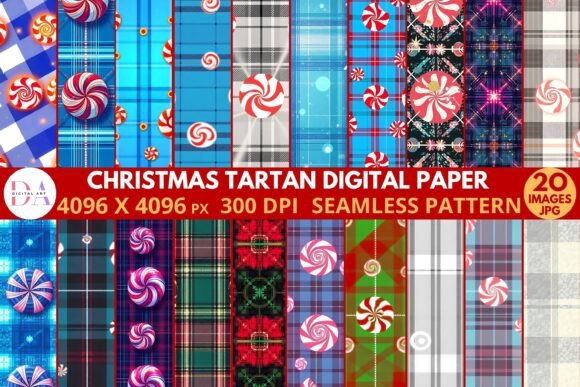
At its core, Christmas tartan digital paper brings together two design elements: the classic crisscross grid of tartan or plaid patterns and the colour palette associated with the holiday season. The result is a set of seamless repeating backgrounds that evoke warmth, tradition, and a sense of heritage. The collection typically includes twenty papers, each formatted as JPG files at 4096 x 4096 pixels with a resolution of 300 dpi. This combination of size and resolution means the images are suitable for both screen-based projects and print applications where sharpness matters.
What sets this type of digital paper apart from generic holiday patterns is the structured geometry of the tartan weave. Unlike abstract splatters or loose watercolour washes, tartan patterns offer a predictable, repeating grid that can bring order to a design. The variations in colour and stripe width across the twenty papers give you flexibility while maintaining a cohesive theme. You might find deep reds paired with forest greens, gold accents woven into traditional checks, or softer frost-toned variations that still read as tartan.
Because the files are digital, you are purchasing a resource rather than a physical product. This means you can download, store, and reuse the papers across multiple projects without worrying about stock running out or paper quality degrading over time.
How Tartan Digital Paper Compares with Other Holiday Pattern Styles
To decide whether Christmas tartan digital paper is the right choice, it helps to consider the broader landscape of seasonal digital backgrounds. Holiday pattern resources generally fall into a few categories, each with its own strengths.
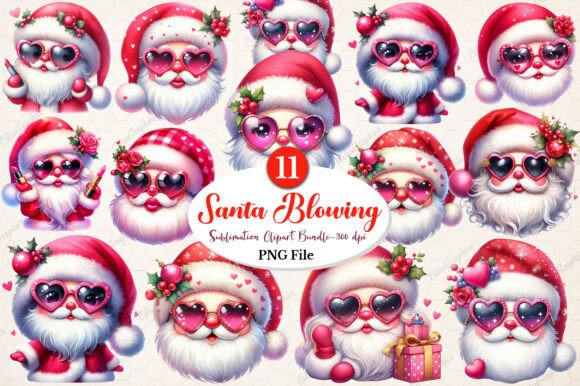
One common alternative is the illustrated or whimsical pattern category. These might feature Santa figures, reindeer, snowmen, or Christmas trees arranged in a repeating tile. Such designs are often charming and narrative-driven, but they can also be limiting. If your project demands a more subtle or sophisticated backdrop, a pattern with large character illustrations may compete with your foreground content rather than support it. Tartan paper, by contrast, provides texture and colour without drawing attention to specific characters or scenes. This makes it a stronger choice for projects where the background should remain in the background.
Another category is the minimalist or Scandinavian-inspired pattern, which often uses clean lines, simple geometric shapes, and muted tones. These are excellent for modern, understated designs. However, they may lack the warmth and festive density that some projects call for. Christmas tartan digital paper occupies a middle ground between the whimsical and the minimalist. It offers visual interest and holiday association without being overly busy or too sparse.
Photographic backgrounds represent a third alternative. A photo of a snowy forest or a fireplace can create a realistic seasonal mood, but such images often come with lighting inconsistencies, focal points that compete with text, and larger file sizes. Tartan patterns, being vector-like in their repeatability, integrate more smoothly into layered designs and are easier to tile across large areas without visible seams.
Ultimately, the choice comes down to the tone you want to set. If your project calls for tradition, structure, and a unified festive palette, tartan digital paper offers advantages that more chaotic or too-simple patterns may not.
Strengths, Tradeoffs, and Best-Fit Situations
Every design resource has its ideal use cases and its limitations. Being aware of both will help you avoid frustration later.
One clear strength of Christmas tartan digital paper is its versatility across project types. Because the patterns are seamless, you can use them for digital scrapbooking, blog backgrounds, website headers, packaging, party printables, card making, and even fashion mood boards. The high resolution and large pixel dimensions mean that even if you scale the pattern up for a banner or a poster, you are unlikely to encounter pixelation. The 300 dpi resolution is a practical standard for printing, so whether you are producing party packs or papercraft items, the quality holds up.
Another advantage is the cohesive look that a tartan set provides. When you have twenty related patterns, you can mix and match within the same project or series without clashing. For example, you might use a darker, denser tartan for a card base and a lighter, more open weave for an accent strip. This kind of flexibility is harder to achieve with a single pattern or with a mismatched collection of unrelated downloads.
However, there are tradeoffs. Tartan patterns are inherently geometric and repeating. If your project calls for organic shapes, irregular textures, or a handcrafted feel, a tartan background may look too uniform or manufactured. In such cases, you might prefer a pattern that mimics handmade paper, fabric textures, or painted surfaces.
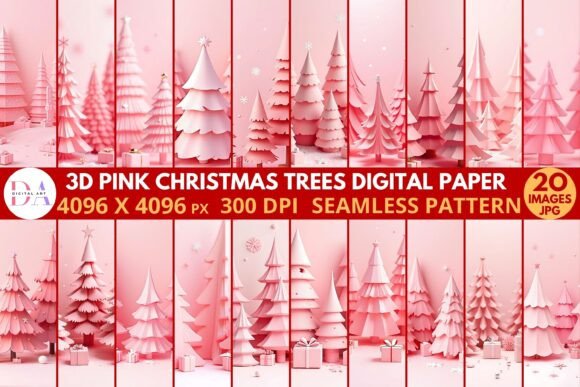
Another limitation is colour specificity. While the Christmas tartan collection includes a range of hues, the palette is anchored in traditional holiday colours. If your brand or project requires a non-traditional Christmas look say, pastel pinks with silver or stark black with white the tartan papers available may not align with your vision. At that point, you would need to look for custom tartan creation tools or alternative pattern styles that offer more colour control.
Best-fit situations for Christmas tartan digital paper include projects where you want a festive but structured background, where you need multiple coordinating patterns, and where the final output is either digital or print. It is less ideal for projects that require highly customised or non-repeating backgrounds, or for designs that rely on photographic realism.
Decision Factors: When This Resource Is Right for You
Choosing between Christmas tartan digital paper and another option depends on a few practical considerations. Let us walk through them.
First, consider the nature of your project. Are you designing a series of holiday cards where each card needs to feel part of a set but still distinct? Twenty coordinated tartan papers give you that range without forcing you to hunt for separate resources. Similarly, if you are building a website or a blog for the holiday season, a tartan background can create an immediate seasonal atmosphere without overwhelming text or navigation elements.
Second, think about the time you have available. Creating your own tartan patterns from scratch requires knowledge of pattern design software and a fair amount of trial and error. Purchasing a ready-made set like this one saves hours of work and ensures the patterns are seamless and print-ready. If your priority is efficiency, this is a strong argument in favour of using a pre-made collection.
Third, evaluate your need for exclusivity. A digital paper set is also available to other buyers, so the same tartan you use on your packaging might appear on someone else's holiday craft project. If uniqueness is critical, you might prefer to commission a custom pattern or use tools that generate one-of-a-kind tartans. On the other hand, for most commercial and personal projects, the subtle differences among twenty papers and your own layout choices are enough to keep your work feeling individual.
Fourth, consider your technical workflow. JPG files at 4096 pixels work well in most design software, from Adobe Photoshop and Illustrator to Canva, Affinity, and Procreate. If you work with software that prefers PNGs with transparency, you may need to factor in extra steps to remove backgrounds if needed. Tartan patterns typically cover the full frame, so transparency is rarely required, but it is worth noting if your project demands layering over other images.
Exploring Alternatives Within the Tartan Category
Even if you are drawn to the tartan style, you are not limited to one format. Some designers prefer vector tartan patterns because they can be scaled infinitely and customised in terms of colour and stripe width. Vector files often come in AI or EPS formats and require vector editing software. Christmas tartan digital paper in JPG format is raster-based, meaning it has a fixed pixel size. For most printing and digital use, 4096 x 4096 at 300 dpi is sufficient for high-quality results, but if you need to blow the pattern up to billboard size, a vector alternative might be more appropriate.
Another variation is the physical tartan paper or fabric that you could scan yourself. This gives you control over texture, colour, and scale, but it also introduces challenges: lighting inconsistencies during scanning, the need for pattern repeating, and the time required to digitise. A professionally made digital paper eliminates these variables.
There are also online tartan generators that let you build a custom pattern by selecting thread counts and colours. These tools offer near-infinite variation, but the output quality varies, and the pattern may not be immediately seamless or print-ready without additional editing. For someone who values convenience and a polished result, a curated set of twenty carefully balanced papers is often the more practical route.
Practical Examples of Use
To make the comparison more concrete, consider a few realistic scenarios.
Imagine you are a small business owner preparing holiday packaging for a line of homemade candles. You want the wrapping to feel festive but not childish. A tartan digital paper used as a box liner or as a wrap-around label gives a traditional, premium look. The seamless repeat means you can cover any size box without visible pattern breaks. If you had chosen a pattern with large illustrated characters, the design might have clashed with the product's simplicity.
Now consider a blogger who writes about holiday entertaining. The blog background for December needs to be festive but also readable behind text. A tartan pattern with a balanced contrast and moderate scale allows the text to remain legible while contributing to the seasonal mood. A photographic background with high contrast or busy details would likely reduce readability and require additional overlays or text boxes.
Finally, think about a digital scrapbooker creating a memory page from Christmas morning. The photos of family and gifts are the focal points. A tartan paper used as the page background adds structure and colour without competing with the images. The collection of twenty papers means you can vary the backgrounds across multiple pages in the same album, creating visual interest while maintaining a unified look.
Making an Informed Choice
Christmas tartan digital paper is not a one-size-fits-all solution, and no single resource should be treated as such. Its value lies in the combination of tradition, structure, versatility, and convenience. The twenty-paper set with high resolution and print-ready specs addresses many common needs for holiday crafting and design.
That said, the right choice always depends on your specific project goals, your timeline, your brand identity, and your personal aesthetic. If you value coordinated patterns that work across multiple applications, and if the tartan aesthetic fits the mood you want to create, this resource offers a solid foundation. If you need custom colours, non-repeating textures, or ultimate exclusivity, you may need to supplement or replace it with other options.
The best approach is to consider your priorities honestly. Efficiency, quality, and coherence are strong reasons to choose a curated digital paper set. Flexibility, uniqueness, and complete creative control are reasons to explore alternatives or to create your own. Neither path is inherently better, but each aligns with different project realities.
By understanding what Christmas tartan digital paper brings to the table and where its boundaries lie, you are in a stronger position to decide whether it belongs in your toolkit this holiday season. Whether you use it as your primary resource or as one element in a broader design strategy, knowing your options is the first step toward a project that looks and feels intentional.