Old Sea Maps Digital Paper: A Designer’s Secret for Vintage Maritime Charm
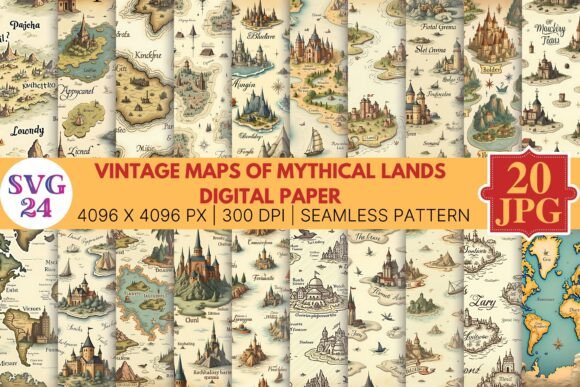
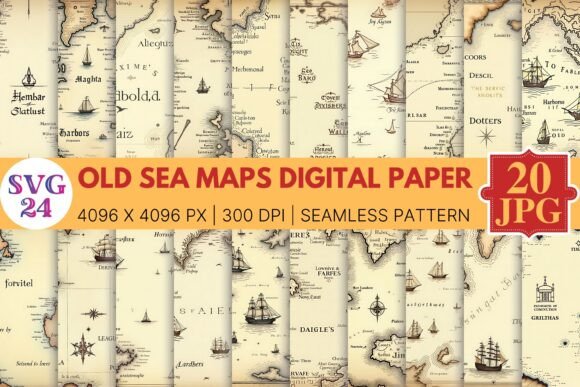
There’s something about an old sea map that stops you mid-scroll. The faded coastlines, the curling sea monsters, the hand-drawn compass roses pointing toward forgotten trade routes. That aesthetic has a quiet pull, even in our hyper-digital world. Old Sea Maps Digital Paper takes that worn, nautical beauty and turns it into a reusable asset for creators who want to bring a sense of history and adventure into their projects. This isn’t just a pattern pack. It’s a collection of 20 JPG files, each sized at 4096 x 4096 pixels with a 300 dpi resolution. And because it’s digital, you don’t get a physical product in the mail. What you do get is a flexible tool that can show up in packaging, on a blog background, inside a scrapbook, or even as part of a wedding invitation suite.
Where vintage navigation meets modern crafting
If you’ve ever tried to create a project that feels old without looking cheap, you know the struggle. Stylized pirate fonts and clip-art anchors only go so far. The real magic comes from texture, from layers that look like they’ve been aged by salt air and sunlight. That’s exactly what this digital paper delivers. Each sheet in the set carries the character of an antique chart: the yellowed paper tone, the ink fades, the occasional crease or stain that makes a flat design feel like a found artifact.
For a scrapbooker, that means you can layer a photo of a coastal vacation over a map of the New England shoreline and have it look like a page from a ship captain’s personal log. For a stationery designer, it means a birthday card that feels like a letter from the age of exploration. The seamless repeating pattern is built into every file, so you can tile the background without awkward seams. That matters if you’re covering a notebook cover, wrapping paper, or a website hero section where the pattern needs to flow uninterrupted.
Small business owners and the power of an instant mood
A lot of product photography relies on clean white backgrounds. That works. But if you sell handmade candles, artisanal soap, or nautical-themed home decor, a white background can feel sterile when your brand voice is anchored in the past. Old Sea Maps Digital Paper gives you a backdrop that communicates age, craftsmanship, and discovery without you having to say a word. You can place a jar of honey on a map of the Mediterranean and your customers will immediately connect the product to a story. The pattern becomes part of the packaging, part of the label design, part of the unboxing experience.
If you run an Etsy shop selling beach-themed prints or driftwood frames, you can use these digital papers as the inside lining of a shadow box, the matting behind a photo, or the printed wrap for a gift. Since the files come at 300 dpi and a generous 4096 pixel width, you can print them out on standard home printers or take them to a local print shop for larger runs. The resolution holds up well even when you scale the pattern to cover a poster or a banner for a market booth.
Bloggers and website designers looking for depth
Website backgrounds can be tricky. A solid color is safe but boring. A photo is heavy and can distract from text. A pattern, especially a seamless one like this, adds texture without overwhelming the content. If you run a travel blog focused on coastal destinations, a history site about maritime lore, or even a lifestyle blog with a vintage leaning, this paper works beautifully as a sidebar background, a featured image overlay, or a subtle repeating tile behind a call-to-action section.
Because it’s a digital file, you can adjust the opacity in any design tool to get the look just right. You might pull a map pattern in at 20 percent opacity behind your blog title, giving the header a parchment feel that doesn’t fight with the readability of your navigation links. You could also crop a section of the map to use as a custom social media graphic background, tying your Instagram presence directly into your website’s visual identity. The consistency across platforms is a big plus for anyone who wants their brand to feel intentional.
Fashion and textile applications that surprise
Fabric design isn’t just for large-scale print houses. Small creators, indie sewists, and makers of one-off accessories can use digital paper to create custom fabric transfers or print-on-demand items. A tote bag printed with a faded sea chart of the Caribbean turns a simple canvas carrier into a conversation starter. A scarf with a subtle map repeat gives off worn explorer energy. Even a simple face mask (prints, patterns, or linings) gets an upgrade when the lining is a clever hidden map detail.
The key here is that the pattern is seamless. When you tile a fabric transfer design, you want the repeat to disappear so the map looks like it continues naturally across the surface. These papers are built for that exact scenario. Whether you’re uploading to a print-on-demand platform or ironing a transfer onto a t-shirt, the map pattern stays cohesive. The 300 dpi resolution also ensures the details stay sharp even after the transfer process, which can sometimes muddy low-resolution images.
Party planners and event designers building a world
Themed parties need more than balloons and a banner. If you’re throwing a pirate-themed birthday, a nautical anniversary, or a retirement party for someone who spent their life at sea, the details matter. Old Sea Maps Digital Paper can become the wrapping for a party favor box, the printed liner inside a gift basket, the background for a photo booth backdrop, or even the paper used to wrap a small guest book. Because you get 20 different map designs, you can mix and match to create visual variety without having to buy multiple product packs.
For a baby shower with a “little explorer” theme, you could print map paper for the cupcake toppers, use it as a table runner insert, and include a custom banner with the baby’s name set against an ocean chart. The flexibility comes from the fact that you control the printing. You can print one sheet on your home printer for a small project or order a larger print run from a professional service for a big event. The digital nature of the product means you can use as much or as little as you need, and the leftovers don’t go to waste because you still have the original file to reprint later.
Common considerations before you use or print
While this digital paper is extremely versatile, a few practical points are worth keeping in mind. First, because the files are 4096 x 4096 pixels, they are large. That’s great for print quality, but if you plan to use them on a website, you’ll want to compress them before uploading. A direct 4096 pixel image will slow down your page load considerably. Use an image optimizer to create a web-friendly version while keeping the original for print.
Second, the pattern is seamless, but it’s still a pattern. If you’re using it as a repeating background on a website, test it at different screen sizes. Some tileable patterns look great on a desktop but create an unintended seam on a mobile view. Always preview your design across devices. If you’re placing the pattern behind text, be mindful of contrast. A busy map with lots of linework can make small type hard to read. In that case, use the pattern sparingly, as an accent rather than a full background.
Third, because this is a digital download, you own the files but you are still responsible for how you apply them. Commercial use is generally fine for products you make and sell yourself, but if you’re planning to distribute the digital files themselves or include them in a larger digital product bundle, check the licensing terms provided by the seller. Most designers allow use in physical products and personal projects but restrict redistribution of the raw files. That’s a standard industry practice, and it protects the creator’s work.
The quiet strength of 20 distinct designs
Having 20 different maps gives you range. Some are crowded with place names and coastal details. Others are more open, with larger areas of parchment tone that let your text or images breathe. You can pick a detailed map for a project where the map itself is the star, and a more spare map for layering under other elements. The variety means you’re not stuck with one look. A black-and-white chart works well for a minimalist packaging look, while a more sepia-toned map fits a rustic or antique mood.
The resolution also means you can crop into a specific map region and still have enough detail to work with. If you want just a corner with a compass rose and a sea monster, you can zoom in, crop, and still have a high-quality image for a small print or an icon. That flexibility extends the life of the product. Instead of using a whole map as a background, you can use fragments for labels, tags, or layered elements in a larger design.
Who will get the most out of this digital paper
The obvious audience is anyone making nautical or historical projects. But the audience is actually broader. A wedding planner designing a seaside ceremony can use these maps as table numbers, menus, or welcome sign backgrounds. A teacher creating a unit on exploration can print maps for classroom displays or project covers. A video creator needs an overlay texture for cinematic lower thirds or title cards. A podcaster with a history or travel show can use the paper as cover art for episodes or as a backdrop for video thumbnails.
Even a home DIYer can use them. Print a map on adhesive paper and turn an old dresser drawer into a treasure chest. Line the inside of a shadow box with a map and display a shell collection. Wrap a journal cover with a map sheet and give it as a hostess gift. The projects don’t require design software or professional printing skills. A home printer, some scissors, and a little glue are enough to start bringing the old sea chart aesthetic into your daily life.
What makes this product stand out is its practicality. It doesn’t ask you to learn a new skill or buy expensive equipment. It meets you where you are. The papers are ready to drop into your existing workflow, whether that’s Photoshop, Canva, Procreate, or your home printer. The seamlessness handles the technical part, so you can focus on the creative part: deciding where a little bit of old-world maritime adventure fits into your world.