Stella the Spacewoman Storybook: A Practical Guide for Parents, Educators, and Creators
If you’ve been looking for a children’s book that blends imagination with real learning, Stella the Spacewoman Storybook might be exactly what you need. Designed for young explorers, this 15-page storybook takes kids on a journey through the solar system, introducing each planet with simple facts and engaging illustrations. But beyond the obvious appeal for bedtime reading, this resource has surprising value across a range of real-world scenarios. Whether you’re a parent, teacher, small business owner, or content creator, there’s a good chance this space-themed storybook fits into your workflow in ways you hadn’t considered.
Let’s walk through what this product actually offers, who it’s for, and how different people can put it to practical use.
What Exactly Is Stella the Spacewoman Storybook?
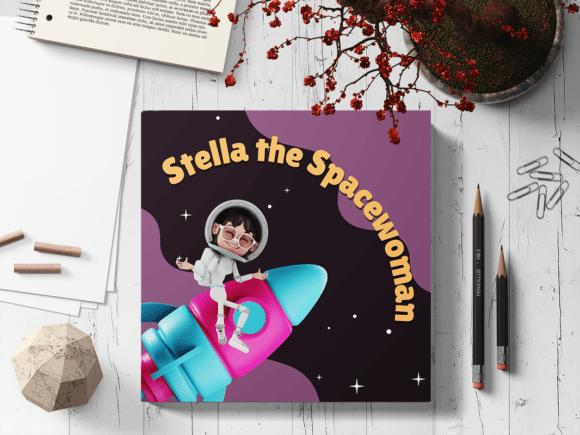
At its core, Stella the Spacewoman Storybook is a downloadable PDF package that includes a 14-page story (plus a cover) following Stella as she flies her spaceship from Mercury to Neptune. Each page combines a short narrative with a fact about the planet, making it both a storybook and a mini astronomy lesson. The package comes with two PDFs (one RGB for digital use, one CMYK for print) and 15 high-quality illustrations in both PNG and JPG formats. That means you’re not just getting a story—you’re getting assets you can reuse, adapt, or display.
The book is aimed at early readers, typically ages 3–7, but the real audience for the product itself is the adult who will read it, share it, or repurpose it. Teachers, homeschooling parents, librarians, children’s content creators, and even small business owners in the kids’ educational space will find the format especially useful.
Where, When, and Why People Use This Storybook
The versatility of Stella the Spacewoman Storybook becomes clear when you think about the different environments where children encounter stories about space. A physical paperback is great, but a digital PDF with separate image files opens up many more possibilities.
At home during bedtime or quiet time – Parents often struggle to find books that are both entertaining and educational without being preachy. This storybook balances a simple plot with bite-sized facts. You can read two pages a night, or use the illustrations as conversation starters. “Why is Mercury so hot?” becomes a natural question after seeing the picture of Stella near the sun.
In classrooms and homeschooling setups – Teachers need resources that fit a theme without requiring hours of prep. The PDF can be projected on a screen or printed as a class set. The separate image files are perfect for making flashcards, posters, or worksheets. If you’re teaching a unit on the solar system, Stella gives you a narrative thread to follow across lessons.
During library story hours or children’s events – Librarians and event coordinators can use the cover image for promotional materials, then read the story aloud from a tablet. The vibrant illustrations hold the attention of a small group, and the planet facts can be turned into a quick quiz afterward.
As a digital product for creators – Content creators who run a blog, YouTube channel, or social media account focused on parenting or education can use the PDF as a lead magnet or bonus for subscribers. The PNG images can be edited into social media posts or short video clips. The story itself is easy to narrate for a read-aloud video (with proper permission, of course).
For Parents: More Than a Bedtime Story
You’ve probably experienced the moment when your child asks a question about space and you fumble for an answer that’s both accurate and understandable. Stella the Spacewoman Storybook solves that. The planet facts are simple enough for a 4-year-old to grasp, but accurate enough that you won’t be corrected later. Parents can use the PDF on a tablet during travel—no bulky books to pack—or print pages to color in (the black-and-white versions aren’t included, but the JPGs can be desaturated in any image editor).
A practical scenario: You’re on a long car ride. Your child is restless. You pull out the tablet, open the PDF, and start reading about Saturn’s rings. By the time you reach Uranus, they’re asking to see the picture of the blue planet again. That’s engagement without a screen battle.
For Educators and Homeschoolers: Ready-Made Lesson Material
If you’re teaching a space unit, you know the pain of gathering resources from ten different websites. This storybook consolidates everything in one place. The 14 pages correspond roughly to one planet per page (with a few bonus pages for the sun and the spaceship). You can assign each page as a reading comprehension exercise, or use the facts as the basis for a science notebook entry. The CMYK PDF is print-ready, so you can produce a class set at a local print shop or on your home printer.
A middle school teacher might think this is too young for their students, but it actually works well as a model text for younger siblings or as a mentor text for a writing assignment where students create their own planet stories. For homeschoolers, the story can be the centerpiece of a multi-day unit: read the book, then research one planet per day, then create a drawing inspired by Stella’s adventure.
For Content Creators and Bloggers: A Content Asset with Multiple Formats
If you run a parenting blog, an educational resource site, or a YouTube channel for kids, Stella the Spacewoman Storybook gives you a ready-made asset you can adapt. The JPG images are high resolution, so you can use them in blog posts as featured images or in printables you offer to your email list. You could create a “Space Explorer Kit” with the story PDF plus a few activity pages you design yourself. The story itself is short enough to be read aloud in a 5-minute video, and the page-by-page format works perfectly for an episodic series.
One realistic use: You run a small Etsy shop selling educational printables. You purchase the storybook and use the illustrations (check the license terms) to create a matching game or planet fact cards. The story gives you a narrative hook to market the whole bundle.
For Small Business Owners and Freelancers: A Low-Effort Product to Upsell
If you sell children’s products or services, you can use this storybook as a value-add. A tutoring service could include the PDF as a free bonus with a summer science package. A children’s party planner could print a few copies for a “space party” goodie bag. A freelance illustrator could study the style of the illustrations (colorful, simple, kid-friendly) to understand what works in the children’s book market. The two PDF formats (RGB for screen, CMYK for print) also demonstrate a professional attention to detail that creators can learn from.
What to Consider Before Buying or Using Stella the Spacewoman Storybook
No product is perfect for everyone, and understanding the limitations helps you decide if this fits your needs.
Age range considerations: The text is simple, so older kids (say, 8+) might find it too basic. If you’re teaching middle schoolers, this is not a primary text—but it could still be a fun warm-up or a model for a project. For preschoolers and early elementary, it’s spot on.
Digital vs. print: Since you receive PDFs and images, you need to do the printing yourself or use a print service. If you want a bound paperback, you’ll need to upload the PDF to a print-on-demand platform. That’s an extra step, but it also means you can customize the format (e.g., spiral-bound for easy holding).
Content accuracy: The book covers basic facts—Mercury is closest to the sun, Venus is hottest, etc. It’s accurate for its level, but it doesn’t go into recent discoveries like Pluto’s reclassification or exoplanets. If you need a more advanced or current text, this may be too simplified. For most young children, the accuracy is more than sufficient.
Usage rights: You’re buying a product for personal or educational use. If you plan to resell the PDF or create derivative products for commercial sale, check the terms provided by the seller. Typically, personal and classroom use is fine, but redistributing the raw files is not. Always read the license.
File format flexibility: The inclusion of both PNG and JPG for all 15 images is a major plus. You can use them in slideshows, social media, or even print them as posters. However, the text is embedded in the illustrations, so you can’t edit the wording without image editing software. If you want to change the text, you’d need to overlay your own.
How the Features Translate to Real Outcomes
It’s easy to list features—15 pages, two PDF formats, 15 images—but what does that mean in practice?
- 15 pages total means the story is short enough to hold a toddler’s attention but long enough to cover all eight planets plus a couple of bonus pages. You can finish it in one sitting or stretch it over a week.
- CMYK print-ready PDF means you can print at a commercial shop without color shifts. That’s important if you’re creating a gift copy or selling it.
- RGB PDF for digital use ensures the colors look vibrant on screens. Perfect for reading on a tablet or phone.
- 15 illustrations in PNG and JPG lets you use the art separately. Teaching kids the planets? Print the images as flashcards. Creating a classroom display? Blow up the PNGs to poster size.
- Simple informative storytelling strikes the balance between entertainment and education. Kids aren’t just hearing a story; they’re absorbing that Mars has the tallest volcano and Neptune has the strongest winds.
Final Practical Advice
If you’re on the fence, consider your immediate need. Do you have a space-themed birthday party coming up? Print the story as a party favor. Are you a first-grade teacher planning a solar system unit? Use the PDF as a read-aloud and the images for a matching activity. Are you a parent who wants to minimize screen time while still using a digital device? Load the PDF on a Kindle or tablet in airplane mode—no ads, no distractions, just Stella.
Stella the Spacewoman Storybook isn’t trying to be a comprehensive encyclopedia. It’s a focused, well-packaged story that bridges the gap between fiction and fact. For the price of a coffee out, you get a resource that can be used in multiple ways across home, school, and creative work. That’s a solid return on investment for anyone who works with young children or creates content for them.
And if you’re still wondering whether it’s the right fit, think about the last time a child asked you a space question. Did you have an answer that was both fun and true? With Stella, you will.